
The hip is one of the largest joints in the human body and is a ball-and-socket joint. The ball is the femoral head, which is the upper end of the femur (thighbone). The socket is formed by the acetabulum, which is part of the large pelvis bone. The bone surfaces of the ball and socket are covered with articular cartilage. This smooth, white connective tissue enables the bones of a joint to easily glide over one another with very little friction, allowing easy movement. The remaining surfaces of the hip joint are covered by the synovial membrane, which is a thin tissue lining that releases fluid that lubricates the cartilage, reducing the friction within the hip joint. Large ligaments (tough bands of tissues) connect the ball and the socket in order to stabilize the joint by preventing excessive movement.
Partial hip replacement is one of several joint replacement procedures we offer, used specifically when a hip fracture — rather than degenerative arthritis — requires surgery.
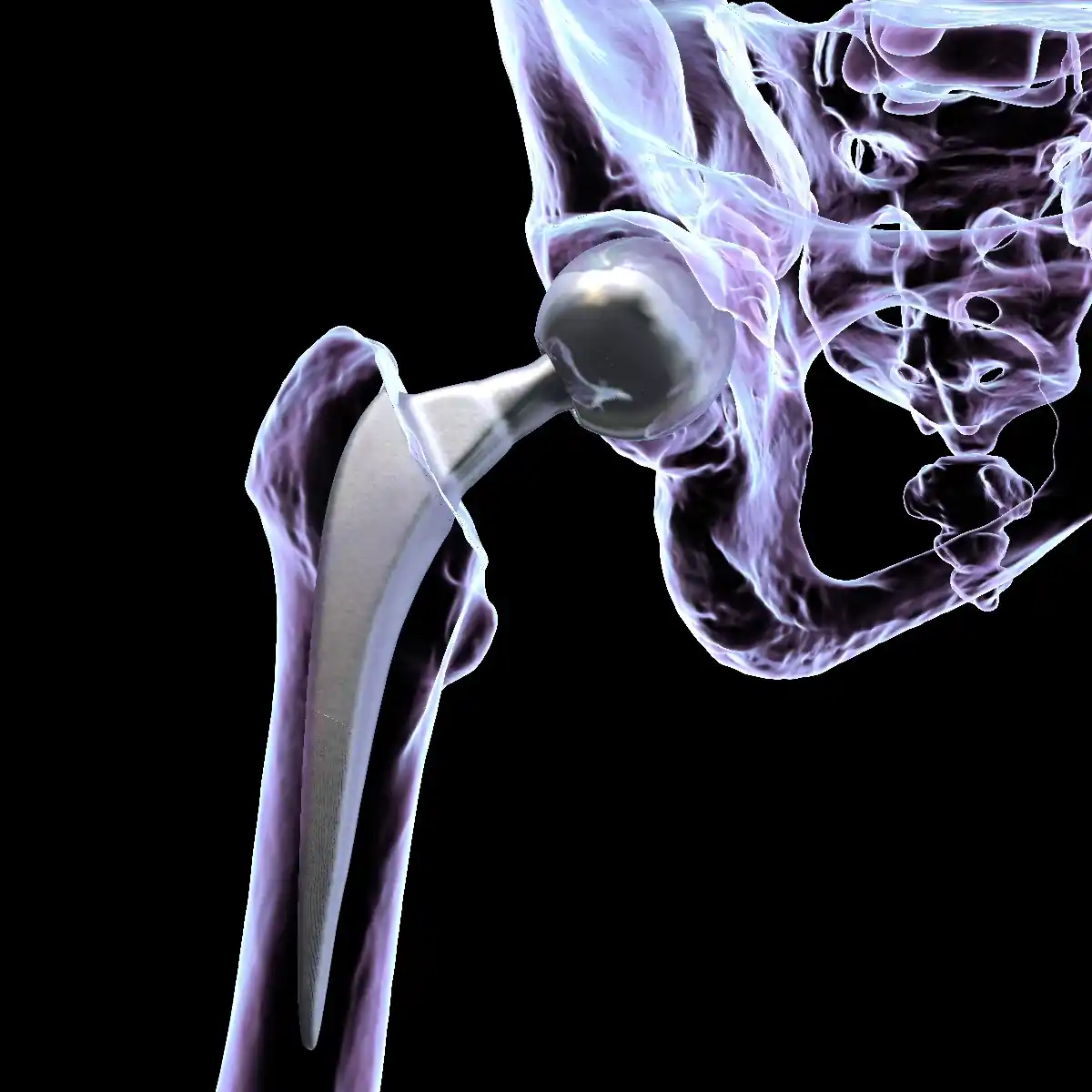
A partial hip replacement, also called a hip hemiarthroplasty, is an operation used to treat certain types of hip fractures.
Despite its name, a “hip fracture” is usually a break in the upper part of the femur, or thighbone. The hip is a ball-and-socket joint:
The femoral head is the ball at the top of the thighbone.
The acetabulum is the socket in the pelvis.
The femoral neck is the short section of bone connecting the ball to the rest of the thighbone.
During a partial hip replacement, the broken femoral head and femoral neck are removed and replaced with an artificial ball and stem. The natural hip socket is left in place.
This is different from a total hip replacement, in which both the ball and the socket are replaced.
Partial hip replacement is performed for certain hip fractures. It is not used as a treatment for routine hip arthritis.
It is most commonly considered when a fracture occurs through the femoral neck, just below the ball of the hip, and the broken pieces have moved out of their normal position. This is called a displaced femoral neck fracture.
These fractures can damage or interrupt the blood supply to the femoral head. As a result, the fracture may not heal reliably if it is repaired with screws or other hardware. Replacing the broken ball of the hip can provide a more dependable way to relieve pain and allow the patient to begin walking.
Not every hip fracture requires a partial hip replacement. Other hip fractures may be treated with:
Screws, a plate, or a rod to hold the broken bone together
A total hip replacement
Nonsurgical treatment in uncommon situations when surgery would create excessive risk
The best treatment depends on several factors, including:
The location and pattern of the fracture
Whether the broken bones have moved out of position
The patient’s age and general health
Walking ability and activity level before the injury
The condition of the hip joint before the fracture
Whether the patient can safely participate in rehabilitation
Some active, medically appropriate patients may benefit more from a total hip replacement. Younger patients may be more likely to have the fracture repaired in an effort to preserve their natural hip. The surgeon will recommend the treatment most appropriate for the individual patient.
Most hip fractures happen after a fall, although a weakened bone can sometimes break with a twisting injury or other minor trauma.
Common symptoms include:
Sudden pain in the hip, groin, or upper thigh
Difficulty or inability to stand or walk
Pain when moving the injured leg
A leg that appears shorter than the other leg
A leg or foot that turns outward
Swelling or bruising around the hip
Some fractures cause less obvious symptoms. A person may still be able to stand or walk but have persistent groin or hip pain after a fall.
A suspected hip fracture requires prompt medical evaluation.
The medical team will ask how the injury occurred and examine the hip and leg. X-rays usually identify the fracture and show whether the broken bones have moved out of position.
Occasionally, a fracture does not appear clearly on the first X-rays. If a fracture is still suspected, an MRI or CT scan may be ordered.
The medical team will also evaluate the patient’s overall health and determine whether any medical conditions need to be addressed before surgery. Blood tests, an electrocardiogram, and other testing may be needed.
Partial hip replacement is performed in an operating room under anesthesia. The general steps include:
Accessing the hip: An incision is made near the hip. The exact location depends on the surgical approach used by the surgeon.
Removing the broken bone: The damaged femoral head and femoral neck are removed.
Preparing the thighbone: The inside of the femur is carefully shaped to hold the new implant.
Placing the implant: A metal stem is inserted into the femur. The stem may be secured with bone cement or may be designed to fit tightly into the bone without cement. An artificial ball is attached to the top of the stem.
Restoring the joint: The artificial ball is placed into the patient’s natural hip socket. The tissues are repaired, and the incision is closed.
The operation replaces the broken ball side of the joint. It does not replace the natural socket.
The main goals after surgery are to control pain, prevent complications, and help the patient begin moving safely.
Most patients are encouraged to sit, stand, and begin walking with assistance soon after surgery, often the following day. A physical therapist will teach the patient how to use a walker or other assistive device safely.
The surgeon will explain how much weight may be placed on the operated leg. Many patients are allowed to put weight on the leg as tolerated, but instructions can vary depending on the fracture, implant, and patient’s overall condition.
Some patients can return directly home with family or caregiver assistance. Others need additional rehabilitation or a temporary stay in a skilled nursing facility.
Recovery after a hip fracture varies considerably. It may take several weeks to several months. Age, overall health, strength before the injury, memory or cognitive problems, and the availability of help at home can all affect recovery. Although the goal is to help patients return as close as possible to their previous level of function, not every patient fully regains the same strength, independence, or walking ability they had before the fracture.
CALL 911 IMMEDIATELY IF YOU ARE HAVING A MEDICAL EMERGENCY!
The information provided on this website or through links to other sites is for patient education purposes only and NOT a substitute for professional medical care. This website contains general, non-exhaustive information about common conditions and treatments and should not be used in the place of a visit or the advice of your physician or healthcare provider. If you think you may be suffering from any medical condition, you should seek immediate medical attention. Reliance on the information appearing on this site and any linked sites is solely at your own risk.