
The shoulder is the most mobile joint in the human body, with a complex arrangement of structures working together to provide the necessary movement. The shoulder is a ball-and-socket joint made up of three bones: the humerus (the bone in the upper arm), the scapula (the shoulder blade), and the clavicle (the collarbone). A strong network of soft tissues and bones works cohesively to provide movement and stability to the shoulder. The head of the humerus fits into a shallow socket in the scapula, and the shoulder capsule, which is a strong connective tissue, surrounds the shoulder joint. Synovial fluid lubricates the joint and the shoulder capsule to ease the movement of the shoulder. This socket is called the glenoid, and a combination of tendons and muscles, called the rotator cuff, centers the humerus in the glenoid, which is the shoulder socket.
Shoulder replacement is one of several joint replacement procedures we offer at Orthopedic + Fracture Specialists.

There are two joints in the shoulder, both of which can be affected by arthritis. The acromioclavicular joint (AC joint) is located where the clavicle meets the tip of the scapula. The glenohumeral joint is located where the head of the humerus fits into the scapula. There are many forms of arthritis, with five major types that typically affect the glenohumeral joint:
Osteoarthritis - Osteoarthritis is the most common form of arthritis and occurs when the protective cartilage on the ends of your bones wears down over time. It's often called a degenerative joint disease where the cartilage experiences a significant amount of wear and tear over a long period of time, generally occurring in individuals over the age of 50.
Rheumatoid Arthritis (RA) - Rheumatoid arthritis is quite possibly the most serious form of arthritis, as it is a major crippling disorder. Unlike osteoarthritis, rheumatoid arthritis affects the synovial membrane (lining of the joints), causing a painful swelling, resulting in joint deformity and bone erosion. Rheumatoid arthritis is three to four times more likely to occur in women and may affect various systems of the body such as eyes, heart, lungs, skin, and the nervous system.
Post-Traumatic Arthritis - Traumatic arthritis is caused by a major or repeated trauma to the articular cartilage. This is most common among individuals who were/are athletic or active. Injuries to joints such as a fracture or dislocation can cause major damage to the articular cartilage, which leads to arthritic changes in the joint over time.
Avascular Necrosis - Avascular necrosis occurs when the blood supply to the head of the humerus is limited or disrupted due to an injury such as a dislocation or fracture. It can also be a complication from some medication. The lack of blood can cause the bone to break down and damage the articular cartilage, resulting in arthritis. This can also occur spontaneously without an injury.
Rotator Cuff Tear Arthropathy - Rotator cuff tear arthropathy is the development of arthritis as a result of a long-standing, large tear in the rotator cuff. When this occurs, the torn rotator cuff is no longer able to hold the head of the humerus in the glenoid socket, causing the ball to ride up, out of the socket. This can damage the surfaces of the bones and cause arthritis.
Individuals who are potential candidates for shoulder replacement surgery typically have the following symptoms:
If conditions worsen or are persistent despite the use of medication and physical therapy, a visit to a physician is highly recommended to identify the cause of the pain and avoid further complications.
Glenohumeral arthritis is diagnosed with a combination of patient history, physical examination, and imaging studies. After discussing the individual's symptoms, the physician will examine the shoulder for weakness, tenderness, pain, and limitation of both passive and active range of motion. The physician will then order an X-ray to examine narrowing of the joint space, changes in the bones, or the formation of bone spurs, and confirm the diagnosis. In some cases, the physician may also order a CT scan or MRI scan to further evaluate the shoulder and rule out other shoulder joint conditions. Once a thorough analysis is done, the physician will discuss options to relieve pain and improve function of the shoulder joint.
As with most arthritic conditions, the initial treatment will be more conservative, non-operative treatment. If shoulder pain persists and the non-operative treatments have been exhausted, the physician may recommend an operative approach. Shoulder replacement surgery is extremely technical; therefore, the physician will evaluate the individual's conditions and situation and provide a recommendation for the best approach.
Shoulder replacement surgery can relieve pain and restore function when arthritis, a severe injury, or another shoulder condition has significantly damaged the joint and nonsurgical treatments are no longer providing adequate relief.
There are two primary types of total shoulder replacement: anatomic total shoulder replacement and reverse total shoulder replacement. Both replace the damaged surfaces of the shoulder joint, but they differ in how the new joint is designed and how the shoulder functions after surgery.

Anatomic total shoulder replacement recreates the shoulder's natural ball-and-socket anatomy. The damaged humeral head (the "ball") is replaced with a metal ball, while the damaged surface of the glenoid (the "socket") is replaced with a smooth socket component.
An anatomic shoulder replacement relies on a functioning rotator cuff to help stabilize and move the shoulder. It may be an excellent option for patients with advanced shoulder arthritis, an intact and functional rotator cuff, and bone anatomy that is appropriate for an anatomic replacement.
The goal of surgery is to reduce pain while restoring comfortable shoulder motion and function.
Click Here to watch an animation of an Anatomic Total Shoulder Replacement.
A reverse total shoulder replacement changes the normal anatomy of the shoulder. A metal ball is attached to the glenoid, or shoulder socket, and a socket-shaped component is placed on the upper arm bone. 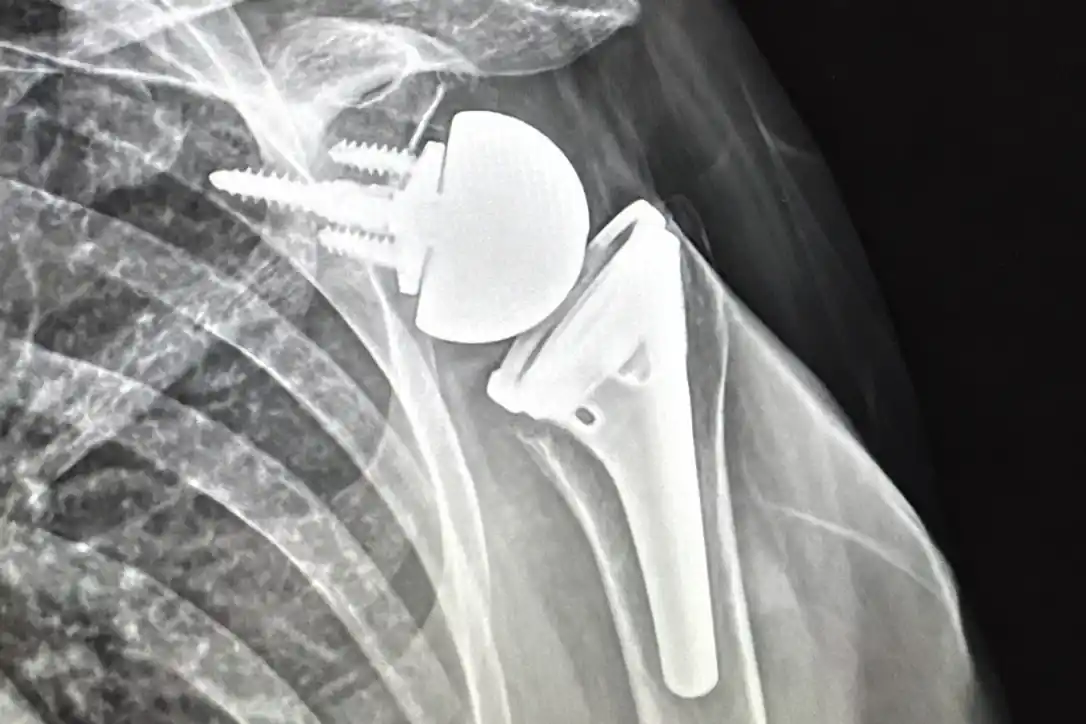
This "reverse" design changes the mechanics of the shoulder so that the deltoid muscle can play a greater role in raising and moving the arm.
Reverse shoulder replacement was initially used primarily for patients with severe rotator cuff deficiency, but its indications have expanded. Depending on the individual patient, reverse shoulder replacement may be considered for:
Click Here to watch an animation of a Reverse Total Shoulder Replacement.
There is no single type of shoulder replacement that is best for every patient. Both anatomic and reverse shoulder replacements can provide excellent pain relief and improved function when used for the appropriate patient.
The decision depends on several factors, including:
When the rotator cuff is healthy and functioning properly, an anatomic total shoulder replacement may offer greater range of motion, particularly internal rotation, as well as potentially greater implant longevity. However, the procedure relies on the rotator cuff to function properly, and rotator cuff failure after surgery can affect the long-term outcome.
Your orthopedic surgeon will evaluate your shoulder using a physical examination and imaging studies. X-rays are routinely used, and a CT scan or MRI may be recommended to evaluate the bone, rotator cuff, or other structures and assist with surgical planning.
The goal is not simply to choose between an anatomic and reverse replacement, but to select the procedure and implant configuration that offers the best opportunity for lasting pain relief, function, and stability for your individual shoulder.
There will be pain after shoulder replacement surgery. However, the physician will provide the necessary medication for managing pain. Regardless of the treatment approach taken, patients go through a rehabilitation program which includes physical therapy exercises that are crucial to restore range of motion. Home care with respect to wound care, diet, and exercise will be critical for the first few weeks following surgery. Each patient is unique, so the therapy program will vary based on his/her level of pain, extent of injury, and desired level of activity they would like to return to. Recovery time after surgery depends on the complexity of the procedure, but the individual's commitment to following all the exercises prescribed by the physical therapist is the most important factor in returning to activities.
CALL 911 IMMEDIATELY IF YOU ARE HAVING A MEDICAL EMERGENCY!
The information provided on this website or through links to other sites is for patient education purposes only and NOT a substitute for professional medical care. This website contains general, non-exhaustive information about common conditions and treatments and should not be used in the place of a visit or the advice of your physician or healthcare provider. If you think you may be suffering from any medical condition, you should seek immediate medical attention. Reliance on the information appearing on this site and any linked sites is solely at your own risk.