
It was a beautiful day, perfect for a bike ride. Now it’s two days later, and you’re still sore from the effort, even though you only rode a few miles. You’ve always been able to recover faster. What’s going on?
Benefits of Staying Active
Muscle function declines as we age, and that means recovery time takes longer. However, staying active while aging is vital for maintaining fitness, muscle mass, and overall health. The key lies in finding the right balance between too much activity, or doing one activity for too long, and doing the right kind of activity while still being active enough to maintain a strong body safely.
There are multiple benefits of staying active while aging. Some of these include:
- Better sleep
- Improved mood
- Easier weight control
- Increased muscle mass
- Higher energy levels
- Stronger immune system
- How to Stay Active?
Although there are some factors of aging we can’t control, such as genetics, there are several steps we can take to stay fit as we age while minimizing the risk of pain and injury.
BALANCE
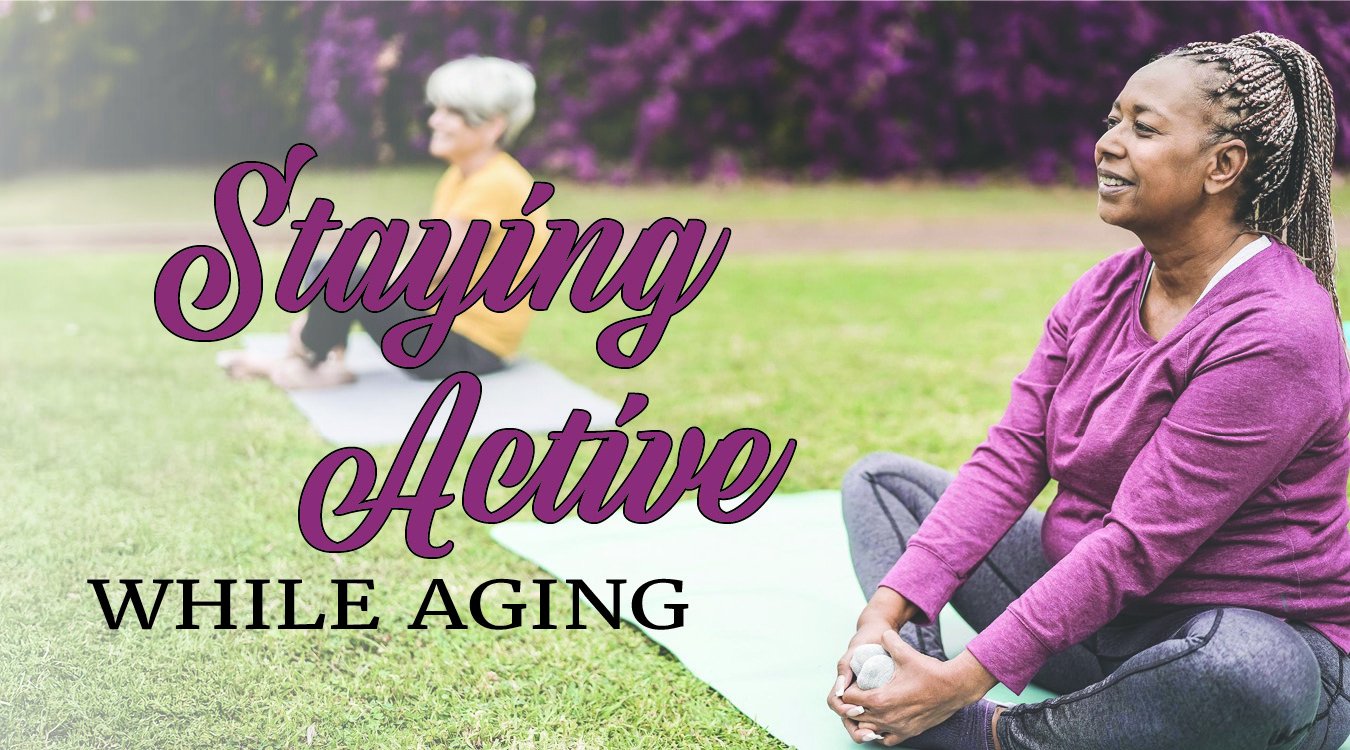
Slips and falls are a major cause of injury as we become older, and having good balance, as well as good muscle tone, will help minimize the risk of falling. Practicing yoga is an excellent way to improve both balance and muscle tone. It’s also gentle on aging joints because it’s a “zero impact” activity. Yoga is an accessible exercise—it can be done almost anywhere with minimal space and equipment, and yoga routines can be custom-tailored to each person’s ability level. Give it a try!
Our physical therapists can build a safe strength and balance plan for you.
CARDIOVASCULAR ACTIVITY
There’s no need to train for a marathon or spend an hour on the stepper at the gym to get a good cardiovascular workout. Shorter spurts of exercise throughout the day, such as brisk walking twice each day for 15-20 minutes can get the job done. As with any impact activity, high or low, be sure your exercising shoes provide sufficient cushioning and support to protect bones, joints, and soft tissues from stress injuries.
WEIGHT TRAINING
For older adults, maintaining muscle mass has been shown to boost life expectancy, and weight training helps improve muscle mass. There’s no need to lift a lot of weight at once to accomplish this; simply use lighter weights and perform more repetitions. Resistance training will also help build muscle mass. Resistance training exercises can include using resistance bands with various elasticities and isometrics, where your own body weight provides the resistance, for example: pushups, planks, chair dips, and pelvic tilts.
LOWER IMPACT EXERCISE
In general, lower impact exercise is better for older joints, and it helps maintain the integrity of bones, muscles, and joints while reducing the chance of pain or injury. For example, instead of jogging, try brisk walking. Instead of doing aerobics where jumping is involved, use the elliptical machine at the gym.
Make today the day you choose happier, healthier aging—get moving and make regular exercise part of your life!
